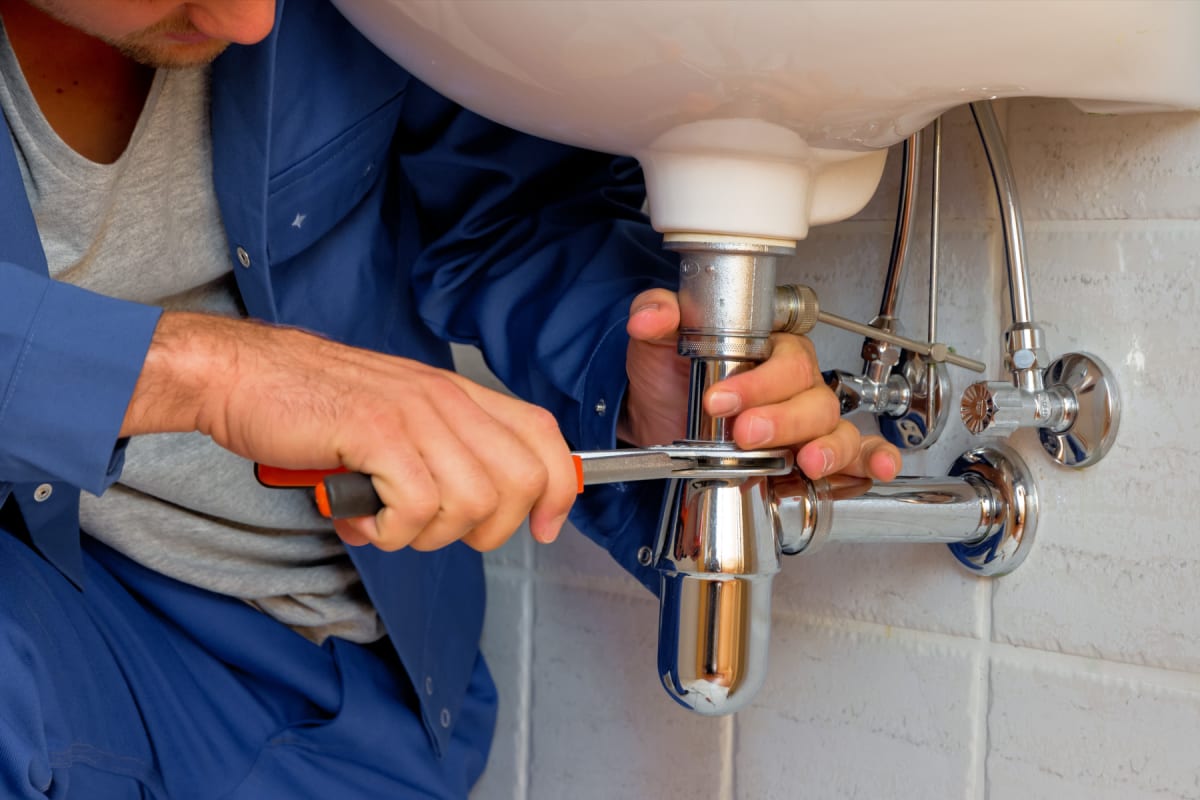
Plumbing services companies that offer continuing education opportunities include the Association of Licensed Plumbing Installers (ALPI), the National Association of Plumbing Engineers (NAPET), the American Association of Plumbing Contractors (AAPP), and the United States Department of Labor (USDOL). Plumbers may choose to pursue further education or apprenticeships in order to increase their knowledge as they gain more experience in their chosen field. When it comes to career progression, plumbers may decide to become supervisors, installers, inspectors, or other positions.
One of the most frequent plumbing problems that homeowners deal with is clogged drains. Blockages can be caused by hair, oil, dirt, and soap scum, but plumbers will remove them by using a specialized tool to break them up. How can I avoid blocked drains.
The cost of the work is the next thing to think about. Many people believe that you have to reimburse the plumber for the time they spend identifying and fixing issues. Also, try to find a local plumber who specializes in the same type of plumbing problems as yours. But some people specialize in particular kinds of work, so if you are experiencing issues with your faucet, for instance, it might be a good idea to find someone who specializes in faucet repairs. The majority of plumbers bill for their services on an hourly basis, and https://sanbernardinoplumbers.net/ the majority charge a fixed fee for the complete job.
These problems include pipe leaks, clogged or damaged drainage systems, etc. He or she may be a layperson or an expert. It is the task of the plumber to build plumbing systems like gutters and drainage system in the houses, offices, industries, factories, etc. A less skilled plumber will worsen the problem and cause more problems than they will solve. Here, the work of a plumber is different from the one done by an untrained person. One of a plumber’s responsibilities is to fix plumbing-related problems. Any complex problem can be handled by a skilled plumber without causing any harm to the structure.
To determine the true cause of the issue, these symptoms must be examined. Finding the symptoms is the second strategy. These symptoms must be checked in order to find out the real cause of the problem. Leaks in bathtubs and sinks, dripping faucets, no hot water, etc. are some of the most typical symptoms.
Even worse, it’s frequently not immediately clear where the leak originates. In actuality, a leak could go undetected for a long time. While many homeowners assume that leaks in their homes are easily identifiable, this is actually far from the truth.